Training
Tight Hips Are Capping Your Squat. Here's What's Going On.
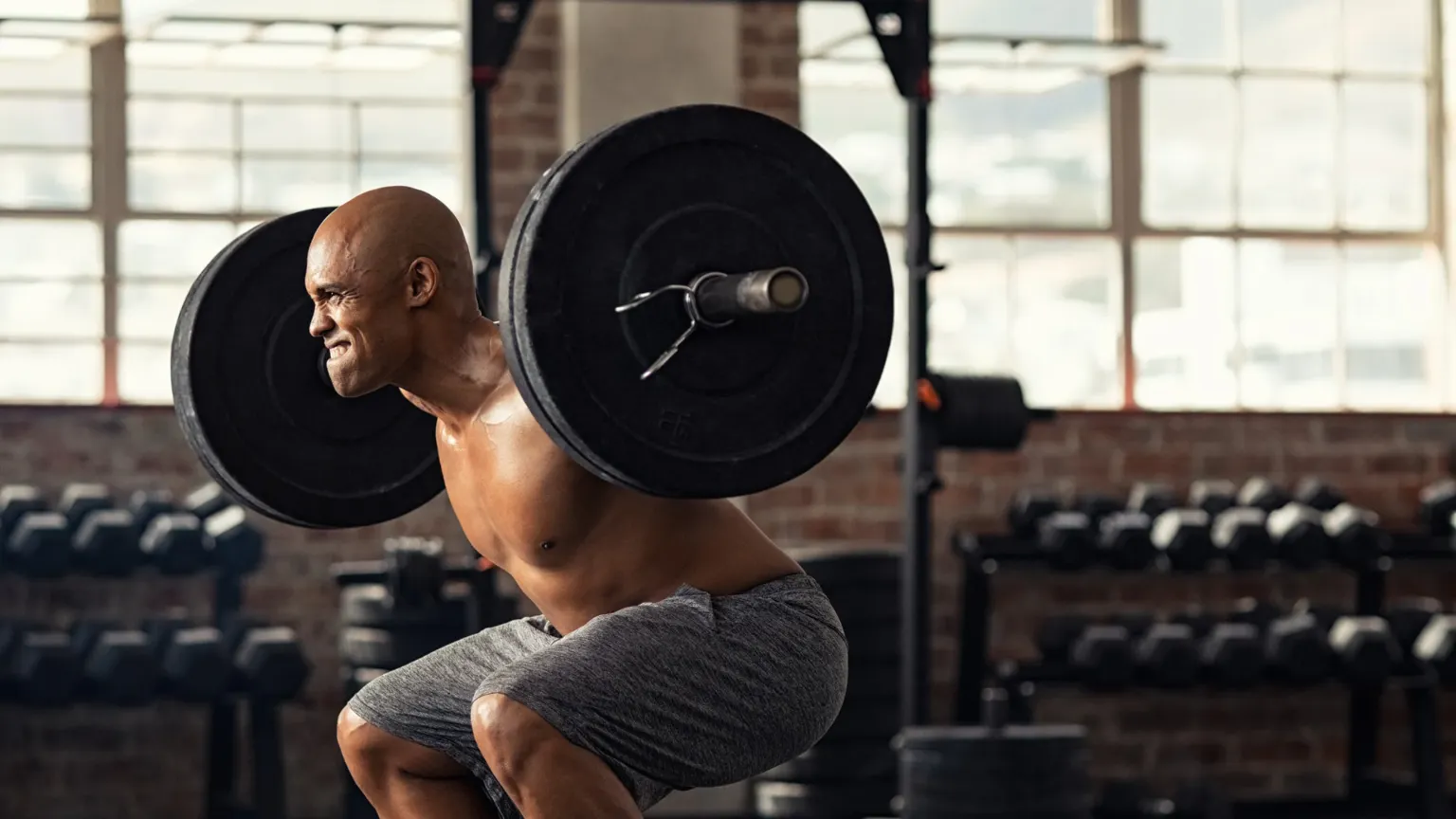
You add weight, your squat gets worse. Not weaker — worse. The hips pinch at the bottom, the chest drops, the lower back rounds, and somewhere in the back of your head a small alarm goes off. You are not sure if it is your form, your anatomy, or something you did years ago that never quite healed. So you stretch before you train, you foam roll, you watch another video, and you go back under the bar and do it again. The alarm is still going off. If tight hips squat performance is your sticking point, the problem is almost certainly not what you think it is.
Why your squat feels worse the stronger you get
Most people assume a stalling squat is a strength problem. Add another set of goblet squats. Pull the knees out harder. Sit back more. These are not wrong cues, but they are answers to the wrong question. The squat does not stall because you got weaker. It stalls because the range your hips can move through has not kept pace with the load you are asking them to handle.
Here is the mechanism. A deep squat requires your hips to flex well past ninety degrees with your femur tracking outward, your pelvis staying relatively neutral, and your ankle dorsiflexion keeping your heel down. When any one of those ranges is missing, your body finds another way to get to the bottom. The pelvis tucks under — what coaches call a butt wink. The torso pitches forward. The knees cave or flare too far. Each of those compensations is your nervous system solving a range problem with a position problem. And the heavier the bar, the harder the compensation gets pressed into tissue.
You have been training a workaround, not a squat. Over time, the workaround gets stronger and the original problem gets harder to fix.
What tight hips actually means — and what people get wrong
When most people say their hips are tight, they mean one thing: the muscles around the hip feel stiff, and stretching them for a few minutes helps a little. So they stretch more. Hip flexor lunges on the mat before training. Pigeon pose after. Banded distractions they found online. The hips feel better for a session or two, and then the same restriction is back.
The reason is that tightness at the hip is rarely just a muscle length issue. It is usually a combination of at least three different things happening at once, and each one needs a different approach.
The first is passive stiffness — connective tissue and muscle that has genuinely shortened from years of sitting, limited movement variety, or compensating around an old injury. Stretching addresses this, but slowly, and only if the stretch is loaded correctly and held long enough to produce an actual tissue response. A ninety-second hip flexor stretch before squatting is not doing much.
The second is motor control. Your hip can physically get into a deeper position, but your nervous system will not allow it under load because it does not trust the position. You have never trained the end range. Your body treats it as a fall. This is not a flexibility problem — it is a strength problem at end range, and no amount of passive stretching fixes it. You need to actively own the position.
The third is joint architecture. Your hip socket and your femoral head have a shape that is yours alone. Some people have deep sockets that limit how far the femur can move before it hits bone. No amount of stretching changes bone on bone contact. These people need to find the squat stance that fits their anatomy, not chase a parallel-foot squat that their structure will never allow.
A coach who knows what they are looking at can usually tell which category you are in within one session. A general stretching programme cannot make that distinction, and most class environments never have time to make it at all.
Why what you have tried has not worked
Stretching on your own, without knowing what you are actually stretching or why, is the most common thing people do and the least likely to produce lasting change. Not because stretching is useless — it is not — but because random stretching without a read on your specific restriction is like taking a handful of supplements without knowing what you are deficient in. Some of it might help. Most of it will not.
Pushing through with more weight is the second most common approach, and arguably the most damaging. More load into a compensation pattern does two things: it reinforces the pattern in your nervous system, and it loads the tissue that is already working too hard to compensate. That is usually the lower back. Or the knee. Or the hip itself, in a position it was not designed to handle under load. This is how a tight hip squat problem becomes a nagging lower back problem, which becomes something that takes weeks to calm down.
Big-box gym classes and most group training environments are not designed to catch this. A coach calling cues across a room of twenty people will tell you to sit back and chest up, and those are correct cues for a normal squat, but they are not a diagnosis. They do not tell you whether the restriction is in your hip flexor, your adductors, your thoracic spine, your ankle, or your hip socket. You need eyes on you, up close, with time to test and think.
Physical therapy often helps, but it tends to end when insurance does. You get the acute problem managed, the pain drops, and the underlying movement limitation that caused it never fully gets addressed. Three months later you are back under the bar and back to the same compensation.
The reframe: your squat is not the problem. Your range is.
Strength and flexibility are not separate tracks. They are the same track. A squat that breaks down at the bottom is not a technique failure — it is a range failure. And a range failure under load is a strength failure at end range. Which means the fix is not more squatting and not more passive stretching. It is building strength through the range you are currently missing.
This is what Strength With Range means in practice. Not adding a stretching block to the end of your training. Not alternating strength days and mobility days. Training the positions that are limiting you, under progressive load, so your body learns to trust them. A deep hip opener held passively teaches your tissue to be long. The same position trained actively — resisted, loaded, worked — teaches your nervous system that it is safe and strong there. That is the difference between temporary relief and a squat that actually improves.
The hip does not need to be looser. It needs to be strong in the range it currently cannot reach.
A systematic way to address tight hips in the squat
The framework has three layers, and they have to be worked in order. Skipping ahead is the reason most self-directed attempts stall.
The first layer is assessment. Before any work begins, a coach needs to establish what is actually restricted and where. This means testing passive range — how far the hip moves when the muscles are relaxed — against active range, which is how far the hip can move under muscular control. It means checking ankle dorsiflexion, thoracic rotation, and the position of the pelvis in a loaded hinge. A hip that looks tight in a squat is sometimes actually a stiff ankle pushing the weight forward, or a thoracic spine that will not extend, forcing the hips to compensate. Treating the hip when the restriction is in the ankle is wasted work.
The second layer is active mobility. Not stretching. Controlled articular rotations, loaded end-range holds, and progressive positions that build strength where range is missing. For someone with tight hips in the squat, this usually means deep hip CARs to wake up the joint's full potential, a loaded split stance to lengthen the hip flexor under tension, and goblet squat holds at the bottom with a weight that creates enough load to train the position without enough load to reinforce the compensation. These are not warm-up exercises. Done properly, they are the hardest part of the session.
The third layer is integration. Once range is available and the nervous system has started to trust it, you return to the squat and rebuild it from scratch. Bodyweight first, then light load, using the new range. Box squats to a depth that was previously impossible. Pause squats that hold the bottom position long enough to make it real. The load goes up only when the new range is stable under the existing load. This is slower than just adding weight. It is also the only approach that actually works.
Alongside the squat work, basic hanging and overhead position assessments matter too. Tight hips and stiff shoulders often come as a package — the same pattern of limited thoracic mobility that caps hip flexion in the squat also caps shoulder flexion in an overhead press or a handstand. Addressing them together, rather than in isolation, is more efficient and produces more durable results.
What this looks like when it works
MOVE has 155 public Google reviews. 153 of them are five stars. The ones that stay with coaches are not the ones about weight on the bar. They are the ones that say things like the strongest I've been in 10 years, or describe coming back from a joint replacement and training harder than they did before surgery. Several reviewers are physicians, a physical therapist, a chiropractor, and a nurse — people who understand anatomy and chose this approach anyway, or chose it because they understand anatomy.
The pattern in those reviews is consistent. Someone arrives with a nagging problem they have been told to work around. A coach finds what is actually limiting them, not what looks limiting from across a room. The restriction gets addressed directly, under load, with progression. And a few months later they are doing things they had written off.
A deep squat that used to feel like the hip was going to pinch off is not a miracle. It is what happens when you stop adding load to a compensation and start building strength in the range the compensation was hiding.
Where to go from here
If tight hips in your squat have been a ceiling for a while, the most useful next step is having a coach look at your actual movement — not a video, not a checklist, not a general mobility programme. A specific assessment of what your hip can and cannot do, where the restriction is coming from, and what progression makes sense for your body and your training history.
At MOVE, everyone starts with Fundamentals: five private sessions where a coach works through exactly this. The hips, the shoulders, the spine. The squat, the hinge, the press, the hang. Seven sessions in total — five private, plus two Stretch Series classes — before you step into group training. Not because group training is dangerous, but because arriving with your foundation already built means you train from day one instead of spending months figuring out what is wrong. Every person in the room has done it. That is why the room feels the way it does.
The first step is a free intro. Book your free intro and start with a coach who looks at how you actually move.
If you want to understand more about how mobility and strength connect before you decide anything, that is a good place to start. The framework is the same whether you train here or somewhere else.
Frequently Asked Questions
Can tight hips in a squat be fixed permanently, or does it keep coming back?
It depends on what is causing the restriction. Passive tissue stiffness can change permanently if you train end range actively and consistently. But if tight hips are capping your squat because of a motor control issue — your nervous system not trusting the position — the fix requires ongoing practice at that end range, not a one-time correction. Most people find that once the range is built properly and integrated into training, it holds well.
How long does it take to see real improvement in hip range for the squat?
With consistent, targeted work, most people notice a measurable change in passive range within four to six weeks. Functional improvement in the squat — being able to use the new range under load — usually takes eight to twelve weeks. The timeline depends heavily on how long the restriction has been there and whether the root cause is muscle length, motor control, or joint architecture.
Should I stop squatting while I work on my hip mobility?
Not necessarily. A modified squat — lighter load, reduced depth, or a stance adjusted to your current range — keeps the movement pattern alive while you address the restriction directly. What you want to avoid is loading the compensation hard: heavy squats to a depth your hips genuinely cannot reach without the pelvis tucking or the chest dropping.
Is butt wink a hip flexibility problem or something else?
Usually both. Posterior pelvic tilt at the bottom of a squat — butt wink — is most commonly caused by limited hip flexion range, limited ankle dorsiflexion, or both. When the hip or ankle runs out of range before you reach your target depth, the pelvis tilts to compensate. Fixing it means identifying which joint is limiting first, then building range there specifically.
Does hip anatomy mean some people just cannot squat deep?
Yes, for some people. Hip socket depth and femoral neck angle vary significantly between individuals, and no amount of flexibility work changes bone structure. People with deeper sockets or certain femoral angles will never achieve a narrow-stance, vertical-torso squat — and chasing that position can create impingement. A coach who understands anatomy can find the stance and depth that fits your structure and build strength from there.
Can tight hips affect more than just the squat?
Yes. The same hip flexor and adductor restrictions that cap a squat also affect deadlift setup, overhead pressing, and any skill that requires the spine to be long and the pelvis to be neutral — including handstands and ring work. Addressing tight hips in the squat tends to carry over into almost everything else you train.
Ready to put this into practice?
Book a free intro with a MOVE GST coach — they'll build a plan around you, not a template.
Book Your Free Intro