Training
The Coach Sommer Philosophy: Training Joints, Not Just Muscles
Most strength programs are easy to judge.
Did the weight increase? Did you perform more repetitions? Did your muscles grow?
Those are useful measures, but they do not tell us whether the rest of the body is prepared for what that new strength can produce.
This is one of the main ideas behind Coach Christopher Sommer's approach to Gymnastic Strength Training. His philosophy is often summarized as training the joints, not just the muscles.
That phrase is useful, but it needs some explanation.
You are not literally isolating and strengthening a joint in the same way you train a muscle. A joint includes bones, cartilage, a capsule, ligaments, tendons, and the muscles that control it.
Training the joints means preparing those structures—and your control of them—for the positions, forces, and training volume you want to handle.
At MOVE, that principle affects almost everything we do. We do not only ask whether someone is strong enough to attempt a movement. We also look at whether their wrists, elbows, shoulders, spine, hips, knees, and ankles are ready for the way that strength will be applied.
Muscular strength can get you into a difficult position. Joint preparation determines whether you can train that position consistently.
What Coach Sommer Means by Physical Preparation
Coach Sommer spent decades developing competitive gymnasts. In gymnastics, advanced strength cannot be separated from mobility, connective-tissue tolerance, body control, and technical positions.
A gymnast does not only need strong shoulders for rings. The shoulders must also tolerate straight-arm loading, extension, overhead positions, instability, and repeated training volume.
A gymnast does not only need strong legs for tumbling. The ankles, knees, hips, and tendons must be prepared to absorb and produce force quickly.
In an extended interview with Tim Ferriss, Coach Sommer described high-level performance as the result of a solid foundation of physical preparation, including appropriate range of motion, mobility, basic strength, and connective-tissue readiness.
GymnasticBodies describes the same idea as first building the physical structure capable of handling the pressures and demands of gymnastics.
This is why the approach can feel slower at the beginning.
You are not only trying to complete a skill. You are developing the qualities required to keep training it.
Muscles Are Only One Part of Strength
Muscles produce force, but they do not work alone.
Tendons connect muscle to bone and transmit muscular force into movement. The nervous system coordinates how much force you produce and when you produce it. The surrounding muscles stabilize the joint while the primary muscles perform the movement.
When one part of that system improves much faster than another, the person may be able to produce more force than their current preparation can tolerate well.
For example, someone may quickly improve their pulling strength with weighted chin-ups. That does not automatically mean their elbows are ready for high-volume back-lever work or difficult straight-arm pulling.
Someone may have a strong overhead press but still lack the wrist tolerance, shoulder flexion, scapular control, and balance practice needed for frequent handstand training.
Someone may squat significant weight but still be unprepared for repeated jumping, landing, lateral movement, or deep single-leg work.
The muscles are strong, but the specific position and type of loading are new.
Connective Tissue Does Not Follow the Same Timeline as Muscular Strength
One reason this philosophy matters is that different tissues do not adapt in exactly the same way or on exactly the same schedule.
Early strength improvements can happen relatively quickly because the nervous system becomes better at recruiting and coordinating muscle. Changes in tendon properties and muscle size generally require repeated exposure over a longer period.
A study examining the time course of muscle and tendon adaptation found that improvements in muscle function appeared before measurable changes in muscle size and tendon stiffness.
Research does show that tendons respond positively to training. A systematic review and meta-analysis of healthy adults found that tendons adapt to several forms of mechanical loading, with loading magnitude playing an important role.
A later systematic review and meta-analysis of lower-limb tendons similarly found that mechanical loading can improve tendon stiffness, modulus, and cross-sectional area.
Coach Sommer has used specific muscle and connective-tissue turnover timelines in interviews to make this point memorable. Those numbers should not be treated as exact universal deadlines for every tissue and every person.
The useful takeaway is simpler:
Your muscles feeling ready does not prove that every tissue involved is ready for a large increase in intensity, range, speed, or volume.
Why Muscular Fatigue Is a Poor Measure of Joint Readiness
A lot of people judge a workout by how tired their muscles feel.
If the muscles are burning and the person is exhausted, the session feels productive. If the exercise does not create much muscular fatigue, it may feel too easy.
That becomes a problem with joint-intensive training.
Your elbows do not need to feel exhausted for a back lever to create significant loading. Your wrists do not need to burn for handstand volume to exceed their current tolerance. Your Achilles tendon does not have to feel tired during jumping before the total workload becomes excessive.
The absence of muscular fatigue does not mean the exercise is placing little demand on the surrounding structures.
This is particularly relevant with:
- Straight-arm strength
- High-volume hanging
- Ring training
- Plyometrics and repeated landings
- Loaded stretching and end-range strength
- Frequent handstand practice
These activities can be trained safely and productively, but progression should not be based only on how tired the main muscles feel.
Straight-Arm Strength Changes the Demands on the Elbows and Shoulders
Straight-arm strength is one of the clearest examples of this philosophy.
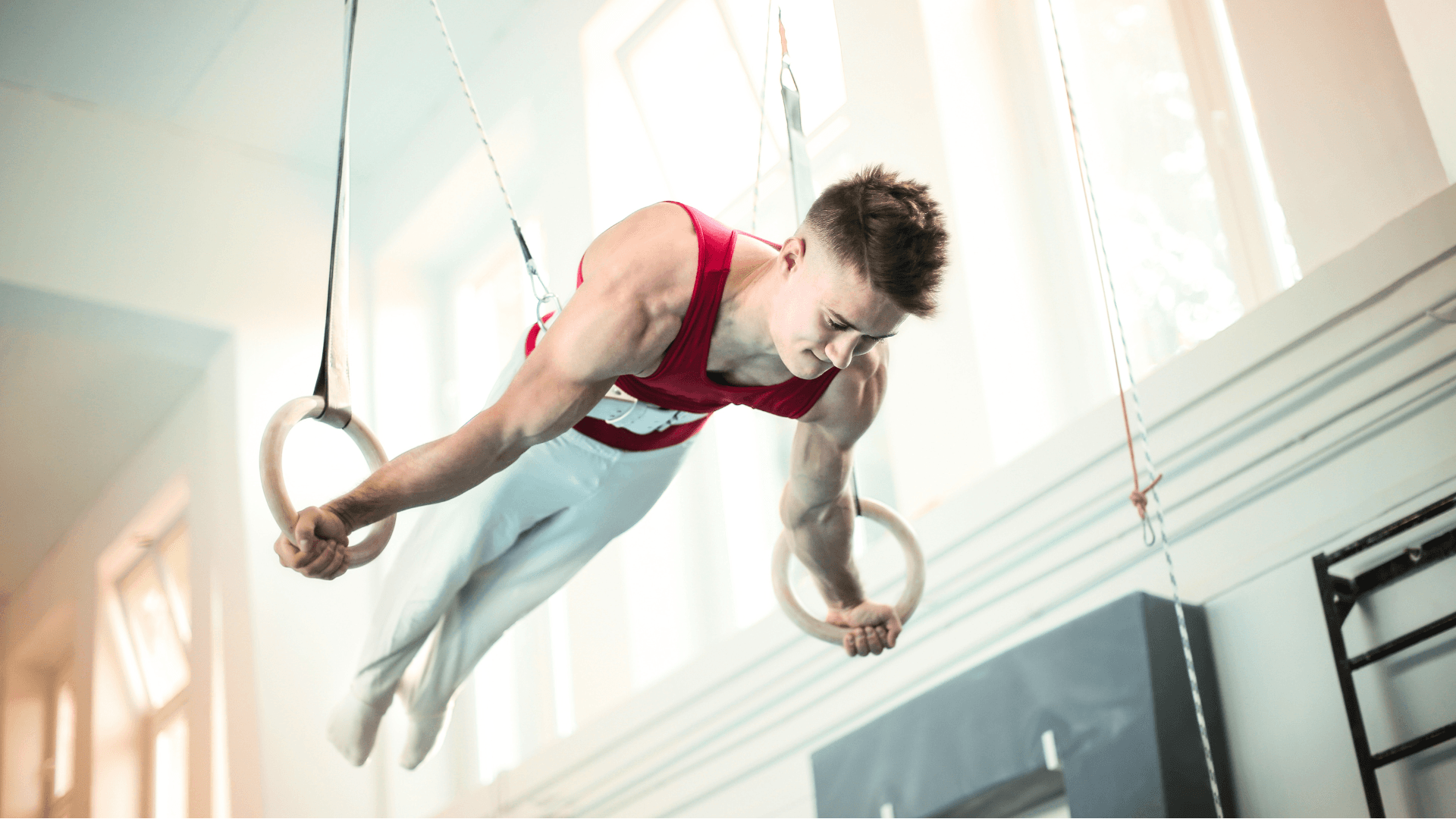
Movements such as planches, levers, ring supports, and certain press-handstand exercises require the athlete to generate and control force while keeping the elbows extended.
This is different from regular bent-arm pulling and pressing.
A person can have good chin-ups and dips but still be completely new to straight-arm loading. Their muscles may be strong, but the position creates a different demand on the elbows, shoulders, biceps tendon, and surrounding tissues.
This is why we use progressions.
A beginner does not need to keep attempting a full back lever to prepare for a back lever. They may need controlled hanging, scapular strength, skin-the-cat progressions, shoulder-extension mobility, tuck variations, and gradually increasing straight-arm exposure.
At MOVE, we want to see whether the person can control the progression and recover from it before adding more leverage or volume.
Mobility Is Part of Joint Preparation
Mobility is not included only because deeper positions look impressive.
Appropriate range of motion allows force to be distributed through positions the body can control.
If someone lacks shoulder flexion, they may compensate through the spine during a handstand or overhead exercise. If they lack shoulder extension, the transition in a muscle-up becomes much harder to perform cleanly.
If ankle mobility is limited, squatting, landing, and single-leg training may shift more demand elsewhere. If the hips cannot access a position, the lower back may be asked to create movement that should have come from the hips.
That does not mean every person needs extreme flexibility.
They need enough range for the task they are training, plus strength and control within that range.
This is why MOVE integrates mobility into strength training instead of treating it as a separate activity that only happens during the warm-up.
Range of Motion Has to Be Introduced Progressively
A position is not automatically dangerous because it places a joint near the end of its range.
The more relevant questions are:
- Has the person developed the range gradually?
- Can they control the position?
- Is the load appropriate?
- How much volume are they performing?
- How are they recovering between sessions?
Coach Sommer has often discussed weighted mobility and progressive exposure to difficult ranges. The key word is progressive.
Living tissues can adapt to loading. However, taking an unprepared joint directly into a difficult range with significant load is different from building that range over months of controlled practice.
A deep Jefferson curl with meaningful weight is not the correct starting point for someone who cannot control a basic spinal roll-down.
A full bridge is not the correct starting point for someone whose wrists and shoulders cannot tolerate the position.
A deep ring dip is not the correct starting point for someone who cannot stabilize a basic support hold.
The exercise may be appropriate eventually. The current progression may not be.
Why Strong Adults Can Still Be Unprepared for GST
This is one of the most common situations we see at MOVE.
Someone has trained for years. They may have a good bench press, deadlift, or squat. They are not a beginner in the gym.
Then they try rings, handstands, deep mobility, or straight-arm work and realize their current strength does not transfer automatically.
That does not mean their previous training was useless.
It means Gymnastic Strength Training asks for qualities their previous program may not have developed:
- Strength through unfamiliar ranges
- Scapular control
- Wrist loading
- Straight-arm strength
- Active flexibility
- Grip endurance
- Control on unstable equipment
The stronger someone is, the more force they may be able to apply immediately. That makes appropriate progressions even more important, because their muscular ability can sometimes exceed their preparation for the new position.
Training the Joints Does Not Mean Avoiding Heavy Load
Joint-conscious training is sometimes misunderstood as using light weights forever and avoiding demanding exercises.
That is not the goal.
Tendons and other structures need mechanical loading to adapt. Avoiding all meaningful load does not prepare the body for harder training.
The research suggests that sufficient loading intensity and localized tendon strain are important contributors to tendon adaptation.
The practical question is whether the load is appropriate for the person's current capacity.
At MOVE, we still want people to become strong. We use calisthenics, rings, barbells, dumbbells, plyometrics, and progressively harder skill work.
We simply do not assume that making an exercise harder as quickly as possible is the best route.
The goal is to increase demand at a rate the whole system can adapt to.
Joint Preparation Is Specific
There is no single joint-preparation exercise that makes someone ready for every skill.
Preparation should reflect the position and force involved.
For handstands, that may include:
- Wrist loading in several directions
- Shoulder flexion
- Overhead scapular control
- Core positioning
- Gradually increasing time upside down
For ring strength, it may include:
- Hanging and pulling
- Support holds
- Rotator cuff work
- Shoulder extension
- Controlled ring rows and assisted dips
For jumping and lower-body work, it may include:
- Calf and foot strength
- Knee and hip control
- Landing mechanics
- Basic strength through the required ranges
- Gradually increasing speed and impact
This is why random exercise selection is not enough. The preparation has to connect to what the person is trying to do.
More Volume Is Not Always Better
Joints are often irritated through an accumulation of work rather than one obviously reckless repetition.
Someone adds handstands every day, increases pull-up volume, starts ring dips, and adds lever training at the same time. Each piece seems reasonable on its own, but the elbows and shoulders experience the total workload.
This is where good programming matters.
We need to look at:
- How many weekly exposures the joint receives
- How intense those exposures are
- Whether the same structures are being loaded repeatedly
- Whether performance is improving or declining
- Whether soreness or irritation is resolving between sessions
Submaximal training is often useful because it allows people to accumulate productive repetitions without turning every session into a test.
You do not have to train to failure to give the muscles and connective tissues a reason to adapt.
Pain Is Not the Same as Productive Difficulty
Training can be uncomfortable. Muscles work hard, positions feel unfamiliar, and mobility exercises can create significant tension.
Joint pain should not automatically be treated as a normal sign of progress.
A mild sensation does not always mean an injury has occurred, and pain is influenced by more than tissue damage. But repeatedly forcing a painful movement without adjusting the load, range, technique, or volume is not a useful long-term strategy.
At MOVE, we can change the progression, reduce the range, provide assistance, adjust the weekly workload, or choose another exercise that trains the same quality.
If pain is persistent, worsening, or affecting daily activities, an appropriate healthcare professional should assess it.
The purpose of joint preparation is not to prove how much discomfort you can tolerate. It is to build capacity.
How MOVE Applies the Coach Sommer Philosophy
The idea of preparing the structure is central to how we coach at MOVE.
It is one reason we do not place a complete beginner directly into advanced Gymnastic Strength Training classes.
Our Fundamentals Program uses five private sessions to introduce the main movement categories, assess the person's current abilities, and prepare them for our training environment.
We look at more than whether someone can complete a repetition. We consider:
- Wrist, shoulder, hip, knee, and ankle preparation
- Pressing and pulling strength
- Core and spinal control
- Mobility restrictions
- Single-leg strength
- Previous injuries and current symptoms
- The person's goals and training history
From there, we can recommend the most appropriate group classes, additional Fundamentals work, or personal training for more individualized needs.
The purpose is not to hold someone back.
It is to give them a starting point that makes progress more likely.
What Training Joints, Not Just Muscles, Looks Like in Practice
You do not need to stop pursuing strength or difficult skills.
You need to train them with enough structure.
In practical terms, that means:
- Build basic strength before adding speed or instability
- Introduce new ranges gradually
- Use progressions you can control
- Accumulate repeatable volume before moving to the next level
- Train mobility alongside strength
- Track joint irritation, not only muscular fatigue
- Avoid adding several new joint-intensive exercises at once
- Allow enough recovery between similar training exposures
None of this is as exciting as attempting the final skill every session.
But it is how advanced work becomes sustainable.
The Goal Is a Body That Can Keep Training
The Coach Sommer philosophy is not anti-muscle.
Muscular strength is essential.
The point is that strength should be developed alongside the mobility, connective-tissue tolerance, control, and technical preparation required to use it.
That matters for gymnasts, but it also matters for adults who want to perform pull-ups, train handstands, use rings, improve mobility, jump, lift weights, or simply remain physically capable as they age.
A program should not only help you do more today.
It should prepare you to keep doing more without constantly stopping because your joints cannot tolerate the training.
Want to Build Strength Without Ignoring Joint Preparation?
At MOVE, we combine strength, mobility, skill work, and progressive joint preparation rather than treating them as separate goals.
Whether you are completely new to Gymnastic Strength Training or already strong but struggling with a specific skill, we can help identify what is missing and build the right progression.
To find the best starting point, book a free one-on-one intro with a MOVE coach.
Research and Coaching References
- Ferriss T. The Secrets of Gymnastic Strength Training: Interview with Christopher Sommer.
- GymnasticBodies. Gymnastics for Climbing Strength: Physical Preparation Before Advanced Performance.
- Kubo K, et al. Time course of changes in muscle and tendon properties during strength training and detraining.
- Bohm S, et al. Human tendon adaptation in response to mechanical loading: a systematic review and meta-analysis.
- Lazarczuk SL, et al. Mechanical, material and morphological adaptations of healthy lower-limb tendons to mechanical loading: a systematic review and meta-analysis.
- Mersmann F, et al. Individualized muscle-tendon assessment and training.
- Brumitt J, et al. Current concepts of muscle and tendon adaptation to strength and conditioning.
Ready to put this into practice?
Book a free intro with a MOVE GST coach — they'll build a plan around you, not a template.
Book Your Free Intro