
Training
Calisthenics vs Weight Training: Do You Need to Choose?
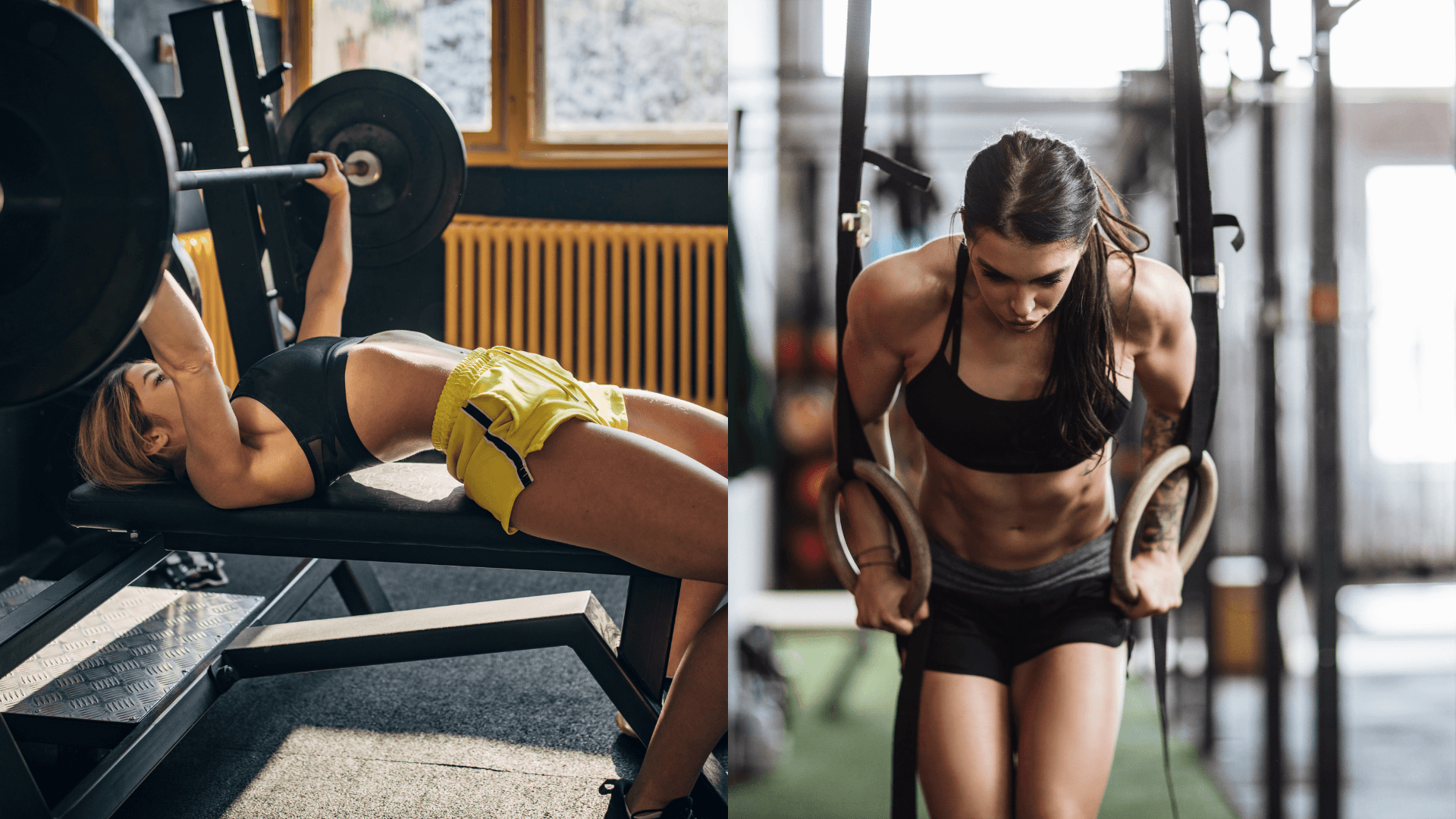
People love putting training methods against each other.
Calisthenics or weights.
Bodyweight training or barbells.
Gymnastics skills or traditional strength work.
But for most people, that is the wrong question.
At MOVE, we use both because they solve different problems.
Weight training is one of the most effective ways to build strength and muscle. Calisthenics develops relative strength, bodyweight control, coordination, and skills that external loading alone does not automatically give you.
You do not need to quit lifting to start calisthenics.
And you do not need to abandon calisthenics because you want to get stronger with weights.
The better question is: what qualities are you trying to build, and which tool helps you build them best?
Weight Training Is Very Good at Building Strength
There is a reason traditional resistance training has been used for decades.
It works.
The American College of Sports Medicine’s 2026 position stand on resistance training reviewed evidence from 137 systematic reviews involving more than 30,000 participants and found that resistance training improves strength, muscle size, power, muscular endurance, balance, gait speed, and broader physical function.
For maximal strength specifically, heavier loads tend to work particularly well.
That makes weight training a very useful tool when you want to increase how much force you can produce.
You can take a squat from 135 pounds to 185.
You can move from 25-pound dumbbells to 40s.
You can add weight to a chin-up.
You can increase load in small, measurable steps.
That makes progression straightforward.
Progressive Overload Is Easy to Measure With External Load
One of the biggest advantages of weight training is how easy it is to quantify.
If an exercise feels appropriate and technique is solid, you can add five pounds.
Or add a repetition.
Or add a set.
You know exactly what changed.
This does not make weight training automatically better than calisthenics.
It just makes certain forms of progression very simple.
Bodyweight training can also be progressively overloaded, but the variables are often different:
- Leverage
- Range of motion
- Assistance
- Body position
- Tempo
- Hold duration
- External weight added to a bodyweight movement
Going from an incline push-up to a floor push-up is progressive overload.
So is moving from a tuck front lever toward a longer lever.
The difference is that the resistance is not always represented by a number on a plate.
Weight Training Builds Muscle Effectively Too
Resistance training is also a very reliable way to build muscle.
A systematic review and meta-analysis comparing different resistance-training loads found that muscle hypertrophy can occur across a broad range of loading intensities when training volume is appropriately matched, while heavier loads tend to produce greater gains in maximal dynamic strength.
That distinction matters.
You do not have to use one narrow rep range to build muscle.
And you do not need to avoid bodyweight training because you care about hypertrophy.
In fact, a small randomized study comparing push-ups with low-load bench press found similar increases in chest and triceps muscle thickness over eight weeks when the relative load was matched.
The takeaway is not that push-ups are superior to bench press.
It is that muscle responds to resistance, not to whether the resistance came from a barbell or your bodyweight.
More Muscle Gives You More Potential to Produce Force
Muscle size and strength are related, but they are not the same thing.
Strength also depends on technique, coordination, neural adaptations, leverage, and familiarity with the movement.
A review of muscle cross-sectional area and strength found that the relationship is real but complex.
So building more muscle does not automatically guarantee that a specific skill will improve.
But more contractile tissue generally gives you more potential to produce force.
That can be useful for calisthenics.
If your lats, upper back, arms, shoulders, and chest become stronger and more muscular, you have more physical capacity to work with when learning pulling and pressing skills.
The skill still has to be practiced.
But the engine is bigger.
Stronger Pulling Supports Calisthenics Pulling Skills
This is where people who already lift often have an advantage.
If you have spent years building rows, pulldowns, deadlifts, and weighted pulling strength, you are not starting from zero.
That strength can help with:
- Pull-ups
- Chin-ups
- Muscle-ups
- Rope climbs
- Front lever progressions
- Ring pulling work
But the transfer is not automatic.
A cable row does not teach you to control your entire body during a front lever.
A lat pulldown does not teach the transition of a muscle-up.
That is where calisthenics adds something different.
The strength gives you capacity.
The bodyweight skill teaches you how to use that capacity in a specific position.
Stronger Pressing Supports Dips, Handstands, and Pushing Skills
The same thing applies to pressing.
Bench press, overhead press, dumbbell pressing, push-ups, and other pressing movements can build the muscle and force-producing capacity that later helps with:
- Dips
- Ring support
- Handstands
- Handstand push-up progressions
- Planche progressions
- Press handstands
Again, there is a gap between being strong and being skilled.
Someone may have a strong overhead press but still struggle to hold a handstand because balance, wrist tolerance, shoulder position, and body line are new.
That does not mean the overhead strength is useless.
It means the skill has additional requirements.
This is one of the main reasons MOVE combines traditional strength development with gymnastics-inspired training rather than asking people to choose one.
What Calisthenics Adds
Calisthenics changes the relationship between you and the resistance.
With a barbell, dumbbell, or machine, you move an external object.
With calisthenics, the object is often you.
That creates different demands.
You have to understand where your body is in space.
You have to organize the trunk.
You have to stabilize the shoulders.
You have to control leverage.
You may need to balance.
On rings, you also have to stabilize the equipment itself.
That is why someone can be very strong in a traditional gym and still feel like a beginner on rings or in a handstand.
They are not suddenly weak.
They are being asked to express strength differently.
Relative Strength Matters More in Bodyweight Skills
Weight training often rewards absolute strength.
Calisthenics places more emphasis on relative strength: how much force you can produce compared with your bodyweight.
If two people can perform the same weighted row but one weighs 150 pounds and the other weighs 220, their experience during a pull-up may be very different.
In a pull-up, your body is the resistance.
The same is true for dips, handstands, levers, and many other bodyweight skills.
That is why body composition can influence calisthenics performance.
But it is also why bodyweight progressions are so useful.
You can change leverage or assistance instead of expecting everyone to move their full bodyweight immediately.
At MOVE, a pull-up is not an entry requirement.
It is something we can build.
Calisthenics Develops Positional Strength
This is one of the biggest additions for someone coming from weight training.
Strength in calisthenics is often tied to a specific body position.
Think about a front lever.
You need pulling strength, but you also need:
- Straight-arm shoulder strength
- Scapular control
- Trunk tension
- Hip position
- Grip
- Awareness of the body line
Or think about a handstand.
Pressing strength helps, but you also need:
- Wrist tolerance
- Shoulder flexion
- Overhead stability
- Trunk control
- Balance through the hands
The movement is more than a force-production problem.
That is why practicing skills matters.
You Do Not Need to Quit Lifting to Start Calisthenics
This is probably the most important point in the article.
If you already enjoy lifting, keep lifting.
There is no rule that says “real” calisthenics athletes must train only with bodyweight.
Weights can help fill gaps that bodyweight training makes harder to load precisely.
For example:
- Lower-body strength is often easier to overload with barbells or dumbbells
- Small load increases are easier with weights
- Hypertrophy work can be easier to dose
- Certain muscle groups can be trained more directly
- External load can strengthen positions that later support bodyweight skills
MOVE’s current group classes deliberately combine gymnastics-inspired strength work, weight training, calisthenics, flexibility, skill development, and conditioning.
We are not trying to turn weightlifters into people who never touch weights again.
We are expanding what they can do.
And You Do Not Need to Add a Full Calisthenics Program on Top of Your Lifting Program
This is where people get themselves into trouble.
They already lift four or five days per week.
Then they get excited about calisthenics and add:
- Handstands every day
- Pull-up training
- Muscle-up practice
- Ring dips
- Lever work
- Extra mobility
- More core training
Nothing from the old program gets removed.
Now they are basically running two programs at the same time.
That usually creates more fatigue than progress.
The better approach is integration.
If pull-ups are now a priority, they may replace some of your existing vertical pulling volume.
If ring dips are a goal, you may reduce some pressing accessory work.
If handstands matter, you may place them early in selected sessions and manage the amount of overhead pressing around them.
If you want to improve a front lever, some of your rowing or straight-arm accessory volume can be chosen specifically to support that goal.
You do not add calisthenics to your program. You build it into your program.
How to Combine Calisthenics and Weight Training
There is no single perfect split.
But a good combined program usually follows a few principles.
Keep the main goal clear
If your goal is your first pull-up, that skill needs enough attention to improve.
If your goal is maximal barbell strength, calisthenics should support that rather than consuming all of your recovery.
You can have several goals, but not every quality can be the top priority at the same time.
Practice skills before heavy fatigue
Technical movements such as handstands, muscle-up transitions, and some ring skills usually benefit from being practiced while you are relatively fresh.
Then strength work can follow.
Use weights where they make progression easier
You do not need a clever bodyweight variation for every muscle group.
Sometimes a squat, Romanian deadlift, dumbbell press, or cable exercise is simply the most practical choice.
Use calisthenics where body control is the goal
If the goal is to get better at supporting, hanging, balancing, or moving your own body, you need exposure to those tasks.
Count total volume
A ring dip and a bench press both create pressing stress.
A front lever progression and a row both load the pulling system.
They should not be treated as unrelated just because one is “calisthenics” and one uses weights.
Example: A Lifter Who Wants Their First Muscle-Up
Imagine someone already lifts three days per week.
They have decent strength but cannot do a muscle-up.
The answer is not necessarily to add three separate calisthenics workouts.
We might restructure their existing training.
Their week could include:
- Specific muscle-up transition practice while fresh
- Pull-ups or weighted chin-ups as the main vertical pull
- Dips or ring dips as a primary pressing movement
- Rows and external rotation work as assistance
- Barbell or dumbbell lower-body training as normal
- Mobility for the shoulders and wrists
- Enough recovery to repeat good work later in the week
They are still lifting.
They are simply using some of that training to support the skill.
Example: A Lifter Who Wants to Learn a Handstand
A handstand requires a different integration.
They may already have plenty of pressing strength.
Their limiting factors could be:
- Wrist tolerance
- Shoulder flexion
- Balance
- Overhead position
- Confidence upside down
Adding more heavy overhead pressing may not solve those things.
So we keep the strength that is already useful and add the missing qualities.
That might mean:
- Wrist preparation
- Wall handstands
- Weight shifts
- Freestanding balance practice
- Shoulder mobility
- Enough overhead strength to maintain the position
This is why coaching matters.
The skill tells us what needs to be trained.
Not the label of the training method.
Calisthenics Can Build Muscle Too
Another misconception is that weights are for muscle and calisthenics is only for skills.
Calisthenics exercises can absolutely build muscle if they provide sufficient resistance and are progressively overloaded.
The push-up versus bench-press study mentioned earlier is a simple example: when relative load was matched, both groups improved chest and triceps thickness similarly over eight weeks.
The limitation is practical.
Eventually, adding five pounds to a bench press may be easier than finding the perfect new push-up leverage.
That is one reason combining methods works so well.
Use the tool that makes progression easiest for the outcome you want.
Weight Training Does Not Automatically Make You “Stiff”
You may also hear that weight training makes people stiff while calisthenics keeps them mobile.
That is too simplistic.
Range of motion, exercise selection, training volume, and mobility practice matter much more than whether you touched a barbell.
Resistance training performed through appropriate ranges can improve mobility as well as strength.
The issue is not weights.
It is whether your program develops the ranges and positions you need.
At MOVE, flexibility and mobility are part of the training alongside weights and calisthenics rather than being treated as a separate philosophy.
Which Is Better for Beginners?
Neither is universally better.
It depends on the goal.
A complete beginner might benefit from both immediately.
For example:
- Bodyweight rows to learn pulling control
- Dumbbell squats to progressively load the legs
- Incline push-ups to build relative pressing strength
- Romanian deadlifts to train the posterior chain
- Hanging for grip and shoulder preparation
- Mobility work for the positions they need
That is already a mixed program.
There is no reason to wait until someone “graduates” from one training style before introducing the other.
Which Is Better if You Already Lift?
If you already lift and want to start calisthenics, you probably do not need to rebuild everything.
You need to identify what transfers and what is missing.
Your existing strength may give you a head start.
Then we look at:
- Bodyweight pulling
- Bodyweight pressing
- Grip
- Straight-arm strength
- Shoulder position
- Mobility
- Core and body line
- Skill-specific coordination
That is much more useful than throwing away a training history that already built something valuable.
Why MOVE Starts With Fundamentals
This is exactly where Fundamentals fits.
A lot of people who start at MOVE are not new to training.
They are new to this style of training.
MOVE’s Fundamentals program is designed as a learning and assessment phase before regular group training. The program uses five private sessions covering lower-body strength, upper-body pressing, rotator cuff work, hanging and pulling, spine and core control, introductory acrobatics, barbell work, plyometrics, and hip flexibility. Members also receive two stretch classes.
That mix is intentional.
We are not asking you to stop lifting.
We want to see how your current strength transfers.
We want to identify where bodyweight control is missing.
We want to see how your shoulders, wrists, hips, and other joints handle the new positions.
Then we choose the next progression.
For someone who has lifted for years, Fundamentals often feels less like “starting over” and more like learning a new language with a body that already has useful strength.
What Happens After Fundamentals?
For many members, the next step is MOVE’s coached group classes.
Those sessions already combine both methods.
MOVE’s current group class structure combines gymnastics-inspired strength work, weight training, calisthenics, flexibility, progressive skill development, and conditioning, with exercises scaled to each member’s level.
So you are not choosing which identity you belong to.
You are building a broader training system.
One day a barbell may be the best tool.
Another day the rings are.
Sometimes the goal is heavier load.
Sometimes it is better body control.
Sometimes it is mobility.
The method follows the goal.
Frequently Asked Questions
Is calisthenics better than weight training?
No single method is universally better. Weight training makes external load progression very straightforward and is highly effective for strength and muscle growth. Calisthenics is excellent for relative strength, bodyweight control, and skill development. The better choice depends on the outcome you want.
Can I build muscle with calisthenics?
Yes. Bodyweight exercises can build muscle when the exercise provides sufficient resistance and is progressively overloaded. Weights may become more convenient when precise load increases are needed.
Should I lift weights if I want to get better at calisthenics?
Weights can be very useful. Stronger pulling and pressing muscles can support pull-ups, dips, muscle-ups, handstands, and other skills. You still need to practice the specific bodyweight positions and skills.
Do I need to stop bodybuilding to start calisthenics?
No. You can keep hypertrophy-focused training while integrating calisthenics skills. The key is adjusting total volume rather than adding a second complete program on top of what you already do.
Can calisthenics replace the gym?
It can provide a complete training system for many people, but it does not have to. External weights are especially useful when you want precise load progression, additional lower-body loading, or targeted hypertrophy work.
How should I combine calisthenics and weight training?
Start with your main goals, place technical skill work before excessive fatigue, keep useful weighted compound exercises, and replace overlapping volume rather than simply adding more training. A coach can help decide which movements should stay and which should change.
You Do Not Need to Choose a Side
Calisthenics versus weight training makes for a good internet debate.
It is not a very useful way to build a training program.
Weights build strength.
Calisthenics builds strength.
Both can build muscle.
Both can be progressively overloaded.
The difference is in what each method asks you to control and how easily certain qualities can be trained.
At MOVE, we want people to become strong enough to move external loads and capable enough to control their own body.
Those goals work very well together.
If you already lift and want to learn calisthenics, you do not need to start over.
You need to find the gaps and build from there.
Book a free one-on-one intro with a MOVE coach and we will help you identify the right starting point.
Research References
- Currier BS, et al. Resistance Training Prescription for Muscle Function, Hypertrophy, and Physical Performance in Healthy Adults: An Overview of Reviews. Medicine & Science in Sports & Exercise. 2026.
- Lasevicius T, et al. Muscle hypertrophy and strength gains after resistance training with different volume-matched loads: a systematic review and meta-analysis. 2022.
- Schoenfeld BJ, et al. Strength and Hypertrophy Adaptations Between Low- vs. High-Load Resistance Training: A Systematic Review and Meta-analysis. 2017.
- Kikuchi N, Nakazato K. Low-load bench press and push-up induce similar muscle hypertrophy and strength gain. Journal of Exercise Science & Fitness. 2017.
- Jones EJ, et al. Cross-sectional area and muscular strength: a brief review. Sports Medicine. 2008.
- MOVE GST. Fundamentals Program.
- MOVE GST. Group Classes.
Ready to put this into practice?
Book a free intro with a MOVE GST coach — they'll build a plan around you, not a template.
Book Your Free Intro