
Training
Active vs Passive Flexibility: Why Calisthenics Needs Both
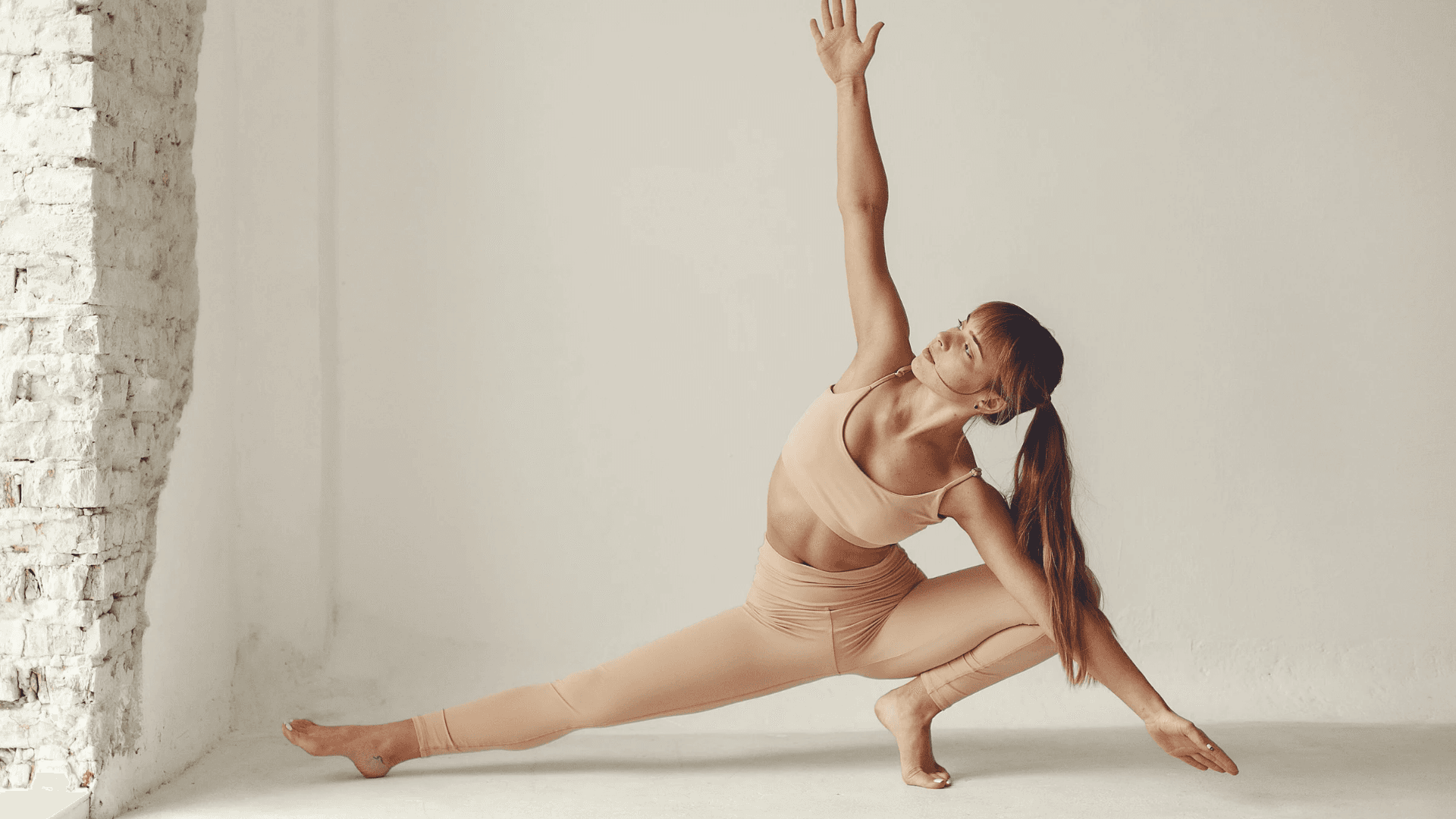
Flexibility is usually talked about like it is one thing.
You can either touch your toes or you cannot.
You can either do the splits or you cannot.
You are either “flexible” or “tight.”
But in calisthenics and Gymnastic Strength Training, that is not enough information.
Someone can have a lot of range when gravity, the floor, or another person helps them into a position and still struggle to use that same range on their own.
That is the difference between passive flexibility and active flexibility.
Both matter.
Passive flexibility gives you access to a position.
Active flexibility is your ability to move into and control that position using your own muscular effort.
For calisthenics, handstands, compression work, press handstands, L-sits, bridges, and many gymnastics-based skills, you usually need some combination of both.
The goal is not simply to create more range. It is to develop enough range for the skill and enough strength to control it.
What Is Passive Flexibility?
Passive flexibility is the range of motion you can reach with help from an external force.
That force might be:
- Gravity
- The floor
- Your hands
- A strap
- A coach or training partner
- A piece of equipment
A front split on the floor is a simple example.
Gravity and the ground help take your hips into the position.
A passive pike stretch is another example.
You may use your arms, gravity, or the weight of your upper body to move closer to your legs.
The muscles responsible for moving you into that position do not have to create all of the force themselves.
That makes passive flexibility a useful way to see how much range is physically available.
What Is Active Flexibility?
Active flexibility is how much of that range you can create and control using your own muscles.
Imagine lying on your back with one leg straight on the floor.
If someone lifts your other leg toward your head, that is passive hip-flexion range.
Now remove their help and lift the leg as high as you can while keeping the knee straight.
That is active range.
The second version asks for more than flexibility.
You need the hip flexors and surrounding muscles to produce enough force to move and hold the leg near the end of the available range.
That is why active flexibility overlaps so heavily with strength.
In gymnastics and calisthenics, you may also hear this described as active mobility.
The terminology varies, but the practical idea is the same:
Can you control the range yourself?
Why Passive Range Is Usually Greater Than Active Range
For most people, passive range is greater than active range.
That makes sense.
An external force can move you into a position without requiring the muscles responsible for that movement to produce all of the effort.
During active movement, those muscles have to create force while often working in shortened positions.
At the same time, the muscles and tissues on the opposite side of the joint still have to tolerate the range.
So active flexibility asks for several things at once:
- Enough passive range
- Strength in the muscles creating the movement
- Coordination
- Positional control
- Enough tolerance to use the position without compensating
That creates what coaches sometimes call an active-passive gap.
You may be able to access a position passively that you cannot yet reproduce actively.
That gap is not automatically a problem.
But it tells us something useful about what may need to be trained next.
A Simple Example: Pike Flexibility vs Compression
This is one of the clearest examples in calisthenics.
Imagine you can sit in a pike and comfortably reach your chest toward your thighs.
That shows you have good passive range through the posterior chain.
Now sit upright with your legs straight and try to lift both heels off the floor without leaning backward.
That is a very different task.
Now your hip flexors and trunk have to actively close the angle between your torso and thighs.
That is compression strength.
You may have enough passive flexibility to fold deeply into a pike and still struggle to lift your feet.
This is why more hamstring stretching is not always the solution.
If the passive pike is already available, the missing quality may be the ability to actively produce force in that compressed position.
For L-sits, V-sits, press handstands, and many leg-lifting movements, that active component matters a lot.
Another Example: Handstands and Shoulder Flexion
Handstands show the same distinction at the shoulders.
You may be able to lie on the floor while someone moves your arms fully overhead.
That tells us passive shoulder flexion is available.
But standing upright and actively reaching the arms into the same position without arching the lower back can be harder.
Now the muscles controlling the shoulder blade and upper arm have to actively create and maintain the position.
In a handstand, they have to do that while supporting your bodyweight.
So a handstand does not only require “flexible shoulders.”
It needs enough shoulder range and the strength and control to use that range overhead.
This is why passive stretching alone does not automatically improve a handstand line.
Sometimes the range needs work.
Sometimes the active control of the range needs work.
Often it is both.
Passive Flexibility Is Still Important
None of this means passive flexibility is less valuable.
You cannot actively control a range that you do not physically have access to.
If someone cannot passively reach enough shoulder flexion for the handstand position, active strength alone cannot create a position that is not currently available.
If the hamstrings limit a pike well before the torso can approach the thighs, passive flexibility work may still be useful.
If the hips do not have enough range for a split, an active split hold cannot solve everything by itself.
Passive flexibility gives you room to work with.
That is why stretching remains useful.
A 2025 systematic review and meta-analysis on the mechanisms behind static-stretching improvements found that chronic static stretching can meaningfully increase range of motion, with changes in stretch tolerance and passive tissue properties contributing to the effect.
So the question is not:
“Should I stretch or strengthen?”
It is:
Which part of the range problem is limiting the movement?
More Passive Range Is Not Always the Next Step
This is where flexibility training often becomes inefficient.
Someone sees that they cannot perform a press handstand.
So they stretch the hamstrings more.
Then more.
Then more.
But if they can already fold deeply into a pike, the next limiting factor may not be passive hamstring length.
It may be:
- Hip-flexor strength
- Compression strength
- Scapular control
- Shoulder flexion
- Handstand balance
- Technique
The same thing happens with handstands.
If you already have enough passive shoulder flexion, repeatedly forcing more passive range may not improve your ability to actively stack the shoulders overhead.
At that point, active shoulder work may be more useful.
Good mobility training starts by identifying whether the limitation is range, strength within the range, or skill using the range.
Active Flexibility Is Strength at the Edge of Your Range
This is probably the most useful way to think about active flexibility.
It is not separate from strength.
It is strength expressed near the end of a range of motion.
When you lift a straight leg as high as possible, the hip flexors are working in a shortened position.
When you actively reach the arms overhead without compensating through the spine, the shoulder and scapular muscles are producing force near the end of that position.
When you hold a deep split without relying entirely on the floor, the muscles around the hips are contributing to the position.
That is why active flexibility work often feels much more like strength training than stretching.
Exercises may include:
- Straight-leg lifts
- Pike compression lifts
- Straddle compression
- Active shoulder flexion
- End-range isometric holds
- Controlled leg raises
- Loaded mobility drills
The goal is not simply to feel a stretch.
The goal is to produce force where the range becomes difficult.
Mobility and Strength Overlap More Than People Think
People often separate strength and flexibility into two different categories.
Strength is lifting.
Flexibility is stretching.
In practice, the line is much less clear.
Resistance training can improve range of motion.
A 2023 systematic review and meta-analysis involving 55 studies found that resistance training with external loads significantly improved range of motion and produced flexibility changes comparable to stretching in the studies that directly compared them.
An earlier 2021 systematic review and meta-analysis reached a similar conclusion: resistance training through range of motion can improve flexibility, with no clear advantage for stretching over strength training for range-of-motion gains.
That does not mean stretching is obsolete.
It means strength training and flexibility training can overlap when exercises are performed through meaningful ranges.
At MOVE, that overlap is intentional.
We may use both dedicated stretching and strength exercises that challenge the range itself.
Strength Through Range Matters
Where you are strong matters.
Someone can be strong in the middle of a squat and weak near the bottom.
Someone can press well with the arms in front of the body but struggle to create force fully overhead.
Someone can pull strongly in a normal row but have very little strength in shoulder extension.
That is one reason full-range resistance training is valuable.
A 2021 systematic review and meta-analysis on resistance-training range of motion found that full-range training generally produced greater strength adaptations than partial-range training across the included studies, although partial-range work can still be useful for specific goals.
For calisthenics, the practical point is simple.
You need strength in the positions the skill asks you to use.
Not only in the middle of the movement.
Active Flexibility in an L-Sit
An L-sit looks like a core exercise.
And it is.
But it also requires active hip flexion.
You need to:
- Push through the arms
- Stabilize the shoulders
- Keep the trunk controlled
- Lift the legs
- Keep the knees straight
Someone may have plenty of passive hamstring flexibility and still struggle to lift the legs high enough.
That is where compression work becomes valuable.
Common progressions may include:
- Seated single-leg lifts
- Seated double-leg compression lifts
- Pike leg lifts
- Tuck L-sits
- One-leg L-sits
- Full L-sits
The passive pike gives you the potential range.
The active work teaches you to use it.
Active Flexibility in a Press Handstand
Press handstands make the distinction even more obvious.
A press handstand asks for several qualities at once:
- Hamstring and hip flexibility
- Compression strength
- Shoulder flexion
- Scapular elevation
- Straight-arm strength
- Balance
- Technique
Being able to passively fold into a deep pike helps.
But the press also requires you to actively bring the legs toward the torso and move the hips over the hands.
If you cannot create compression actively, passive flexibility alone will not finish the skill.
This is why people sometimes spend years “stretching for a press” without realizing that the missing piece is strength.
Active Flexibility in Straddle Positions
Straddle work creates the same problem.
A passive middle split tells us how far the hips can open with help from gravity.
But straddle compression requires you to actively lift and control the legs while they are spread.
A straddle L-sit or straddle press handstand may require:
- Passive hip range
- Active hip flexion
- Adductor length
- Hip-abductor and rotator control
- Trunk strength
- Straight-leg control
Again, the passive position matters.
It just does not tell the whole story.
Bridges Need More Than Passive Shoulder Range
A bridge is often treated as a pure flexibility skill.
But a useful bridge requires more than being able to stretch into extension.
You need enough range through the shoulders, spine, and hips.
You also need strength to:
- Push through the arms
- Control the shoulder position
- Support the bodyweight
- Distribute extension rather than collapsing into one area
This is why MOVE does not treat deeper range as automatically better.
A bridge should become stronger and more controlled as the range improves.
Why Forcing More Range Can Become the Wrong Goal
Flexibility progress can become addictive because the measurement is simple.
Can you go farther?
Can you get lower?
Can you pull the leg closer?
But more range is not always what the skill needs next.
If you already have enough passive range, repeatedly forcing beyond it may add very little to the movement you actually care about.
A better next step may be:
- Holding the position actively
- Adding resistance
- Improving control on the way in and out
- Strengthening the shortened muscles
- Using the range in the actual skill
This is one reason MOVE avoids treating mobility as a contest to see who can stretch the farthest.
We want range you can use.
Passive Flexibility Can Create the Opportunity for Active Flexibility
There is still an important sequence here.
If active range is limited because passive range is genuinely restricted, improving passive flexibility can create more space for active work.
For example:
- Improve passive shoulder flexion
- Practice active overhead reaches
- Strengthen the shoulder in that new range
- Apply it to handstand work
Or:
- Improve passive pike flexibility
- Add compression lifts
- Increase active hip-flexion range
- Apply it to L-sits and press-handstand progressions
This is why the two qualities support each other.
Passive work expands what is available.
Active work teaches you to use it.
How to Tell Which One You Need More Of
You do not need complicated testing to get a useful idea.
Compare the passive and active versions of the same position.
Shoulder flexion
Can your arms reach farther overhead when lying down or when someone assists them than when you actively reach overhead standing?
If yes, active control may be part of the limitation.
Hip flexion
Can someone move your straight leg much higher than you can lift it yourself?
If yes, you likely have more passive range than active range.
Pike
Can you fold deeply using gravity and your hands but struggle to lift your legs during compression drills?
That suggests active strength needs attention.
Straddle
Can you sit comfortably in a wide straddle but struggle to lift the legs or hold them high?
Again, active strength may be the bigger gap.
These are not medical assessments.
They are simple coaching comparisons that help guide exercise selection.
You Do Not Need to Eliminate the Active-Passive Gap
There will usually be some difference between passive and active range.
That is normal.
You do not need to make every joint's active range identical to its passive limit.
The goal is to have enough active control for the task you care about.
A handstand needs enough active shoulder flexion to support a good overhead position.
A press handstand needs enough active compression to move the hips efficiently over the hands.
An L-sit needs enough active hip flexion to keep the legs elevated.
Your training should match the skill.
Active Flexibility Still Needs Progressive Overload
Because active flexibility is partly a strength quality, it needs progression too.
You can progress active mobility work by:
- Increasing the range
- Holding the end position longer
- Adding repetitions
- Adding external resistance
- Reducing assistance
- Improving body position
- Increasing leverage
A seated leg lift that barely clears the floor can eventually become a higher lift.
Then ankle weights may be added.
Then the same strength can be used inside a more difficult compression drill.
That is progressive overload applied to mobility.
The principle is no different from other strength training.
Do Not Turn Every Mobility Drill Into Max Effort
Active mobility can be demanding.
That does not mean every set needs to become a maximum contraction.
Technique still matters.
If you are doing compression lifts and the knees bend, the torso collapses, and the hips shift to create more height, the extra range may not represent the quality you were trying to train.
The same principle applies to active shoulder flexion.
If the arms move farther overhead only because the lower back arches more, the shoulder range did not necessarily improve.
The goal is controlled range.
Not simply more movement.
How MOVE Combines Passive and Active Flexibility
MOVE's approach to mobility is not based on choosing one method.
We use different tools depending on what the person needs.
That may include:
- Passive stretching
- Active flexibility
- Loaded mobility
- Strength through larger ranges
- End-range holds
- Compression work
- Shoulder mobility
- Hip mobility
- Skill-specific range work
The purpose is to connect the range to the movement.
If someone wants a handstand, we care about shoulder flexion and overhead control.
If someone wants an L-sit or press handstand, we care about pike range and active compression.
If someone wants stronger bridges, we care about both extension range and the strength to support it.
Mobility is not a separate activity we do simply because everyone is supposed to stretch.
It is part of the physical preparation for the training.
Why MOVE Starts With Fundamentals
This is also one reason every new training member starts with Fundamentals.
Fundamentals is a five-session private coaching series that gives us a chance to see how your current strength, mobility, body control, and training history fit together before moving into the next phase.
The sessions cover:
- Lower-body mechanics, single-leg strength, knees, and hamstrings
- Upper-body pressing
- Rotator cuff work, hanging, and pulling
- Spine, core, and introductory acrobatics
- Barbell technique, plyometrics, and hip flexibility
We are not expecting you to arrive flexible.
And we are not expecting every person to need the same mobility work.
Someone may need more passive shoulder range.
Someone else may already have plenty of range but struggle to control it.
One person may need hamstring flexibility.
Another may need much more compression strength.
The assessment helps us decide what the next step should be.
Flexibility Should Make More Skills Available
The reason we care about flexibility at MOVE is not to collect impressive stretching positions.
We want it to improve what you can do.
Passive flexibility matters because it creates access to range.
Active flexibility matters because it lets you use that range under your own control.
Strength training matters because the positions eventually need to tolerate force.
Skill practice matters because range and strength still have to be coordinated into the movement.
That is why calisthenics needs both active and passive flexibility.
Passive range gives you the position. Active strength helps you own it.
Frequently Asked Questions
What is the difference between active and passive flexibility?
Passive flexibility is the range you can reach with help from an external force such as gravity, your hands, a strap, or another person. Active flexibility is the range you can create and control using your own muscles.
Why is my passive flexibility better than my active flexibility?
Passive movement does not require the muscles responsible for the movement to produce as much force. Active flexibility requires enough range plus strength and coordination near the end of that range, so active range is often smaller.
Is active flexibility the same as mobility?
The terms are often used differently across coaching systems. In practice, active flexibility is commonly treated as a form of mobility because it requires active control of range rather than simply passive access to it.
Which is more important for calisthenics?
Both. Passive flexibility gives you access to positions, while active flexibility helps you control those positions. Skills such as handstands, L-sits, press handstands, bridges, and compression work usually require a combination.
Can I improve flexibility with strength training?
Yes. Research shows resistance training performed through appropriate ranges can improve range of motion, sometimes to a similar degree as stretching. Dedicated stretching can still be useful when passive range itself is limiting.
What is compression strength?
Compression strength is the ability to actively close the angle between the torso and legs, usually through hip flexion and trunk control. It is important for L-sits, V-sits, pike lifts, and press handstands.
Should I stretch more if I cannot do a press handstand?
Not necessarily. If passive pike and shoulder range are already sufficient, the limitation may be compression strength, straight-arm strength, balance, or technique. More passive range is useful only if range is truly the limiting factor.
How often should I train active flexibility?
There is no universal frequency. It depends on the exercise intensity, training volume, and the rest of your program. Lower-intensity active mobility can often be practiced frequently, while heavily loaded end-range work should be treated more like strength training and given appropriate recovery.
Want to Know What Is Limiting Your Mobility?
It is easy to spend months stretching the area that feels tight without knowing whether more passive flexibility is what you actually need.
Sometimes the missing piece is range.
Sometimes it is strength.
Sometimes it is control.
And sometimes it is the skill itself.
At MOVE, Fundamentals gives us a coached starting point so we can see which qualities need to be developed first.
If you want to improve your mobility for calisthenics, handstands, compression, or Gymnastic Strength Training, book a free one-on-one intro with a MOVE coach.
We will help you figure out what range you need and how to build the strength to use it.
Research References
- Alizadeh S, et al. Resistance Training Induces Improvements in Range of Motion: A Systematic Review and Meta-Analysis. Sports Medicine. 2023.
- Afonso J, et al. Strength Training versus Stretching for Improving Range of Motion: A Systematic Review and Meta-Analysis. Healthcare. 2021.
- Pallarés JG, et al. Effects of Range of Motion on Resistance Training Adaptations: A Systematic Review and Meta-Analysis. Scandinavian Journal of Medicine & Science in Sports. 2021.
- Ingram LA, et al. Mechanisms Underlying Range of Motion Improvements Following Acute and Chronic Static Stretching: A Systematic Review, Meta-analysis and Multivariate Meta-regression. Sports Medicine. 2025.
- Favro F, et al. The Influence of Resistance Training on Joint Flexibility in Healthy Adults: A Systematic Review, Meta-analysis, and Meta-regression. Journal of Strength and Conditioning Research. 2025.
- MOVE GST. Fundamentals Program.
- MOVE GST. Group Classes.
Ready to put this into practice?
Book a free intro with a MOVE GST coach — they'll build a plan around you, not a template.
Book Your Free Intro